Compression Therapy for Circulation and Recovery: What to Expect
Dynamic compression therapy uses pneumatic boots that inflate in a sequential wave from the feet upward, designed to support circulation and lymphatic flow in the legs. Research shows its strongest clinical support in lymphedema and venous care, while athletes mainly use it to reduce muscle soreness after hard training.
Key Points
- Sequential pneumatic massage from the feet upward
- Strongest evidence base in lymphedema care
- Adjunctive support in venous conditions
- Post-exercise benefit: mainly reduced perceived soreness
- Pressure is adjustable and sessions are deeply relaxing
What Compression Therapy Is
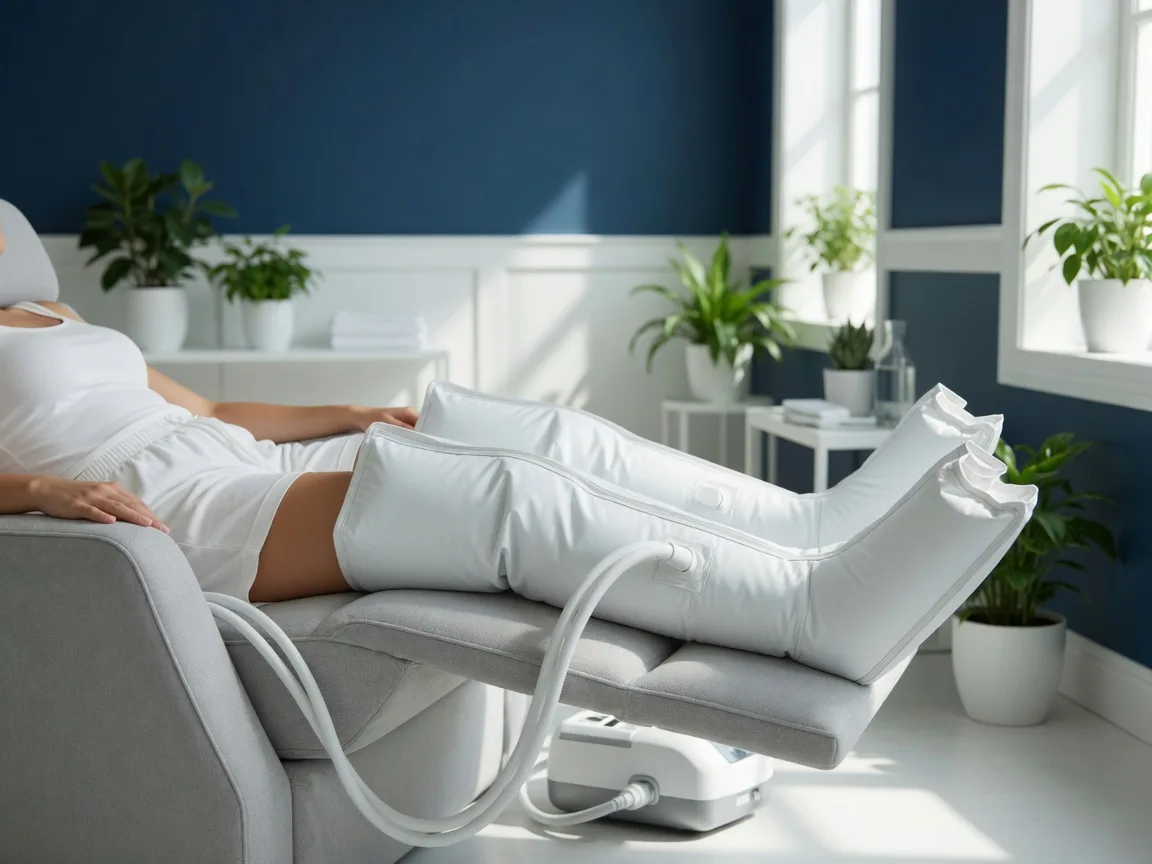
You sit or recline with your legs inside fitted pneumatic boots connected to a system that inflates and deflates them in a wave, starting at the feet and moving upward. Each wave gently moves fluid and blood toward the torso, supporting venous and lymphatic return.
It is non-invasive, comfortable and adjustable, which is why it is used everywhere from professional sports to wellness clinics.
What the Research Shows
A systematic review of randomized trials for lower-extremity lymphedema found limb volume reductions across trials, making compression one of the better-studied tools in that area. A 2003 systematic review in the Journal of Vascular Surgery found some trials showed benefit for long-standing venous ulcers that had failed other therapy, and a 2020 randomized trial found faster healing when compression was added to standard care.
For sports recovery, the evidence is more modest: meta-analyses find pneumatic compression mainly reduces delayed muscle soreness, with performance-recovery benefits not clearly established. That is still a real benefit for active adults.
How It Fits Into a Recovery Program
Compression works well alongside other circulation-supporting tools: EECP for heartbeat-synchronized circulation support, red light for cellular energy and hyperbaric oxygen for recovery. At Thrive, these are combined into individualized programs rather than offered as isolated gadgets.
What a Session Feels Like
Sessions feel like a deep, rhythmic massage on the legs: inflate, hold, release, wave after wave. Most patients find it deeply relaxing, and some fall asleep. Pressure is tailored to your comfort and never painful.
Travelers, people with sedentary jobs, athletes and anyone with tired, heavy legs are the most common users in Draper and across the South Salt Lake Valley.
Sources & References
Independent, authoritative sources used in this article, linked so you can verify the details yourself. Information here is educational and not a substitute for medical advice.
- PubMed: Lower-Limb Intermittent Pneumatic Compression and Sports Recovery (2024)
- Systematic Review: Intermittent Pneumatic Compression for Lower-Extremity Lymphedema
- Randomized Trial: Intermittent Pneumatic Compression and Venous Ulcer Healing (2020)
- Systematic Review: Pneumatic Compression for Chronic Venous Insufficiency (2003)
Want to Explore This Further?
This article is part of the Thrive EECP Health Library in Draper, Utah. If the topic above sounds relevant to you, the next step is a free, no-pressure conversation about your goals.
About the Author
This article was authored and curated by Phil Kim for the Thrive EECP Health Library, with content guidance from the Thrive team. It is educational information, not medical advice, and does not create a patient relationship. Always consult a qualified healthcare professional about your health.