Vibration Therapy: What It Is and What the Research Shows
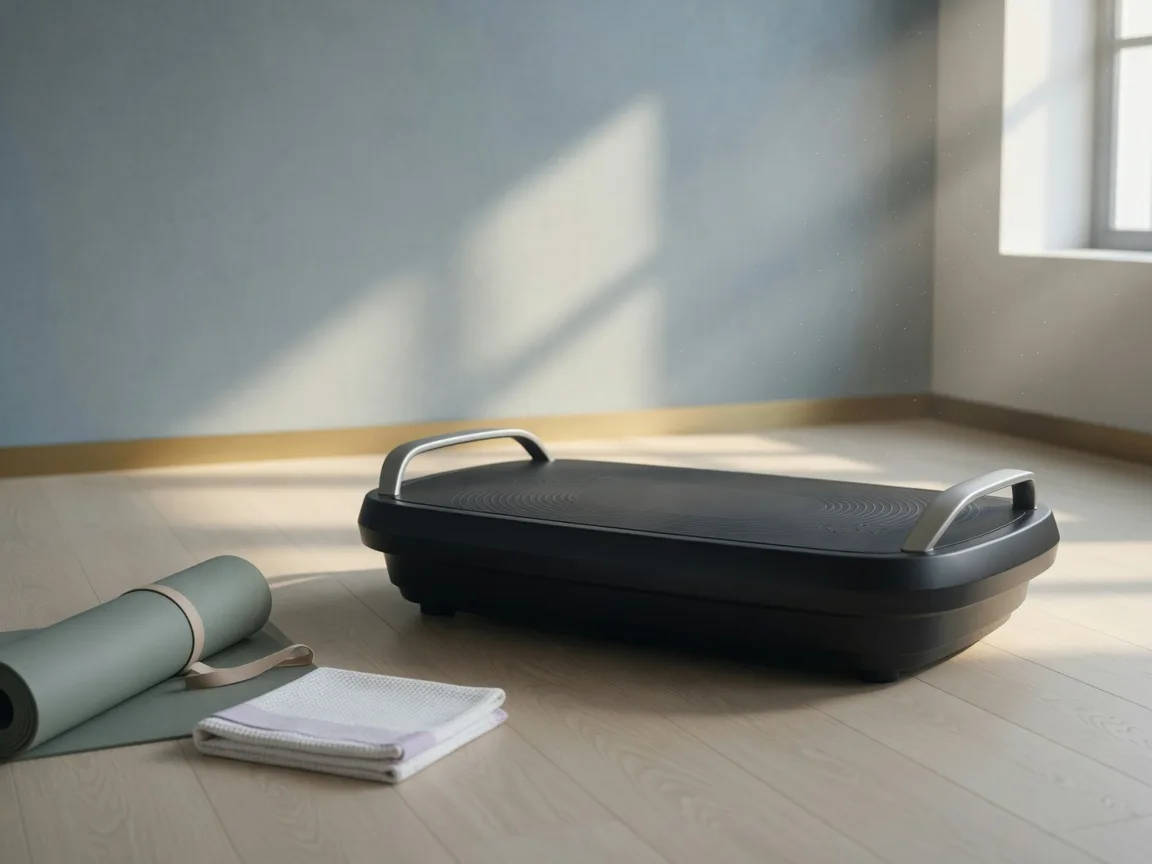
Whole-body vibration therapy is simple in concept and growing in evidence: you stand on a gently vibrating platform, and clinical research shows its most consistent benefits for leg muscle strength and balance in older adults, with smaller, site-specific effects on bone density and acute improvements in lower-leg blood flow. It is a short, non-invasive stimulus, not a substitute for exercise.
Key Points
- A platform transmits gentle mechanical vibrations through the body
- Meta-analyses support gains in leg muscle strength in older adults
- Evidence supports balance benefits and reduced fall risk
- Bone density effects are modest and site-specific
- Acute sessions increase lower-leg blood flow
What Whole-Body Vibration Is
You stand, sit or hold positions on a platform that produces controlled mechanical vibrations within a frequency range the body tolerates well. Your muscles respond subtly to keep you stable, which is part of the point: low-effort muscle activation.
Sessions are short, usually 10 to 20 minutes, and can be combined with light exercises like squats, calf raises or balance holds.
What the Research Shows
A 2011 systematic review and meta-analysis of 13 randomized trials concluded whole-body vibration benefits leg muscle strength in older adults. A 2017 BMJ Open meta-analysis found vibration reduces fall rate in adults 50 and older, suggesting it may protect against fractures mainly by preventing falls.
Bone density evidence is more mixed: multiple meta-analyses find small, site-specific improvements rather than broad effects. A 2020 randomized study found vibration at 20 to 25 Hz significantly increased foot skin blood flow during and after exposure.
Who May Benefit
Older adults seeking strength and balance support, active adults adding a recovery or warm-up stimulus, and people whose conditions limit high-impact exercise may all benefit. Vibration is not appropriate for everyone: pregnant women, people with recent joint surgery, certain spine conditions or implanted devices should clear it with a professional first.
How Thrive Uses It
At Thrive EECP in Draper, vibration sessions are guided, progressive and often paired with circulation and recovery tools like compression, red light and EECP. The goal is a well-rounded program, not a gimmick, and every session starts with an honest health history review.
Sources & References
Independent, authoritative sources used in this article, linked so you can verify the details yourself. Information here is educational and not a substitute for medical advice.
Want to Explore This Further?
This article is part of the Thrive EECP Health Library in Draper, Utah. If the topic above sounds relevant to you, the next step is a free, no-pressure conversation about your goals.
About the Author
This article was authored and curated by Phil Kim for the Thrive EECP Health Library, with content guidance from the Thrive team. It is educational information, not medical advice, and does not create a patient relationship. Always consult a qualified healthcare professional about your health.